NPC & Creature DESIGN
Solar Echoes TTRPG: Playable Alien Species Design
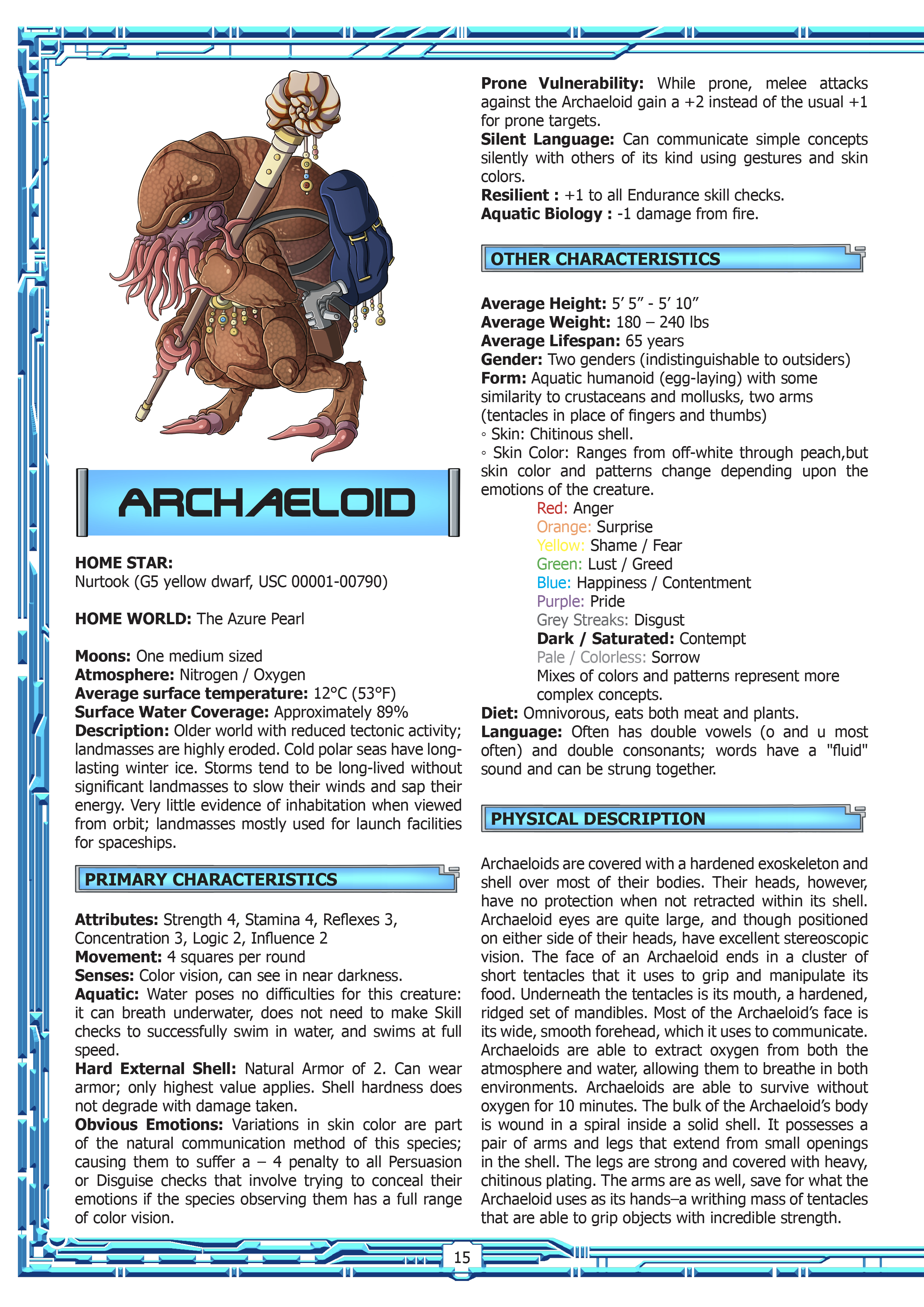
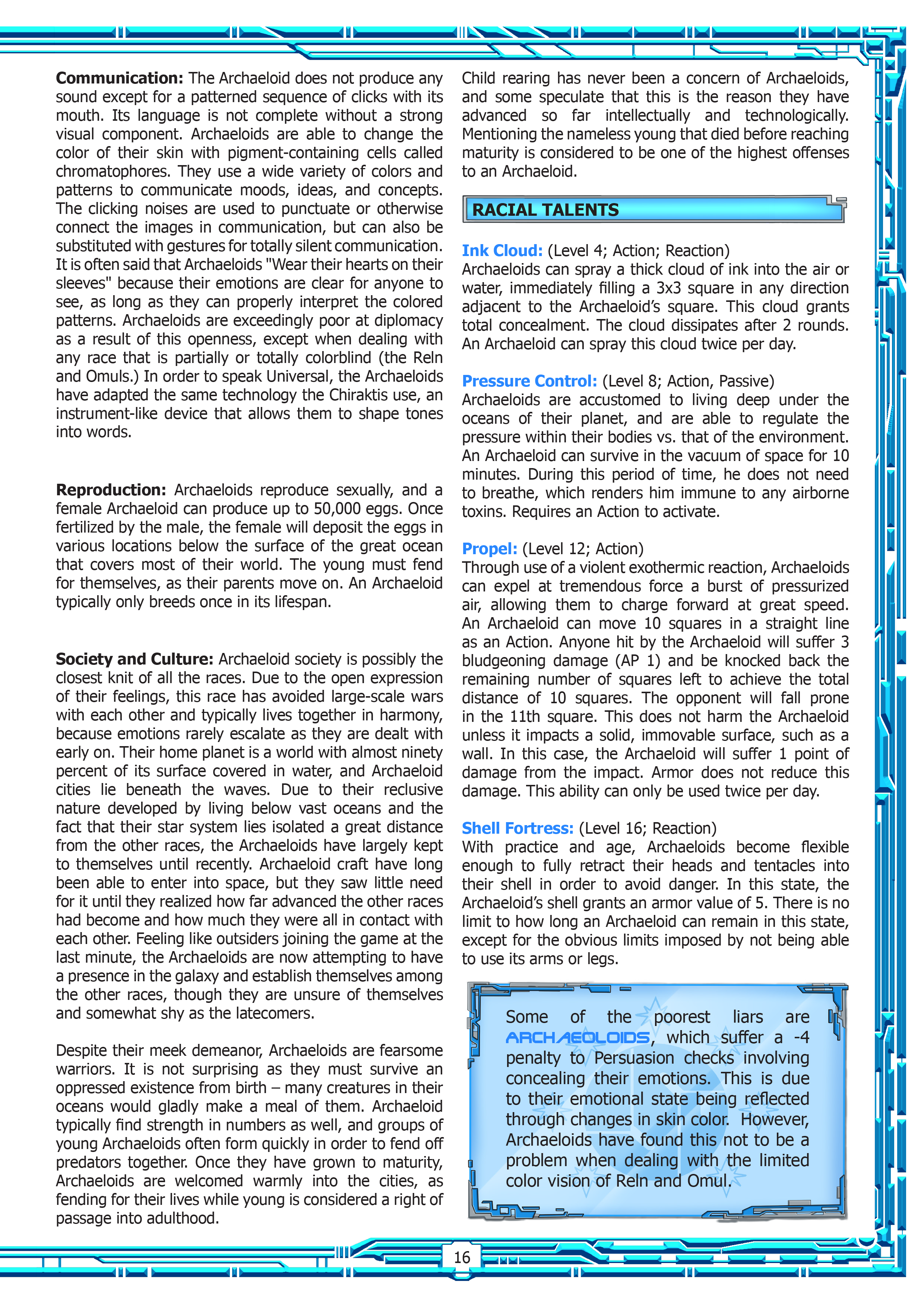
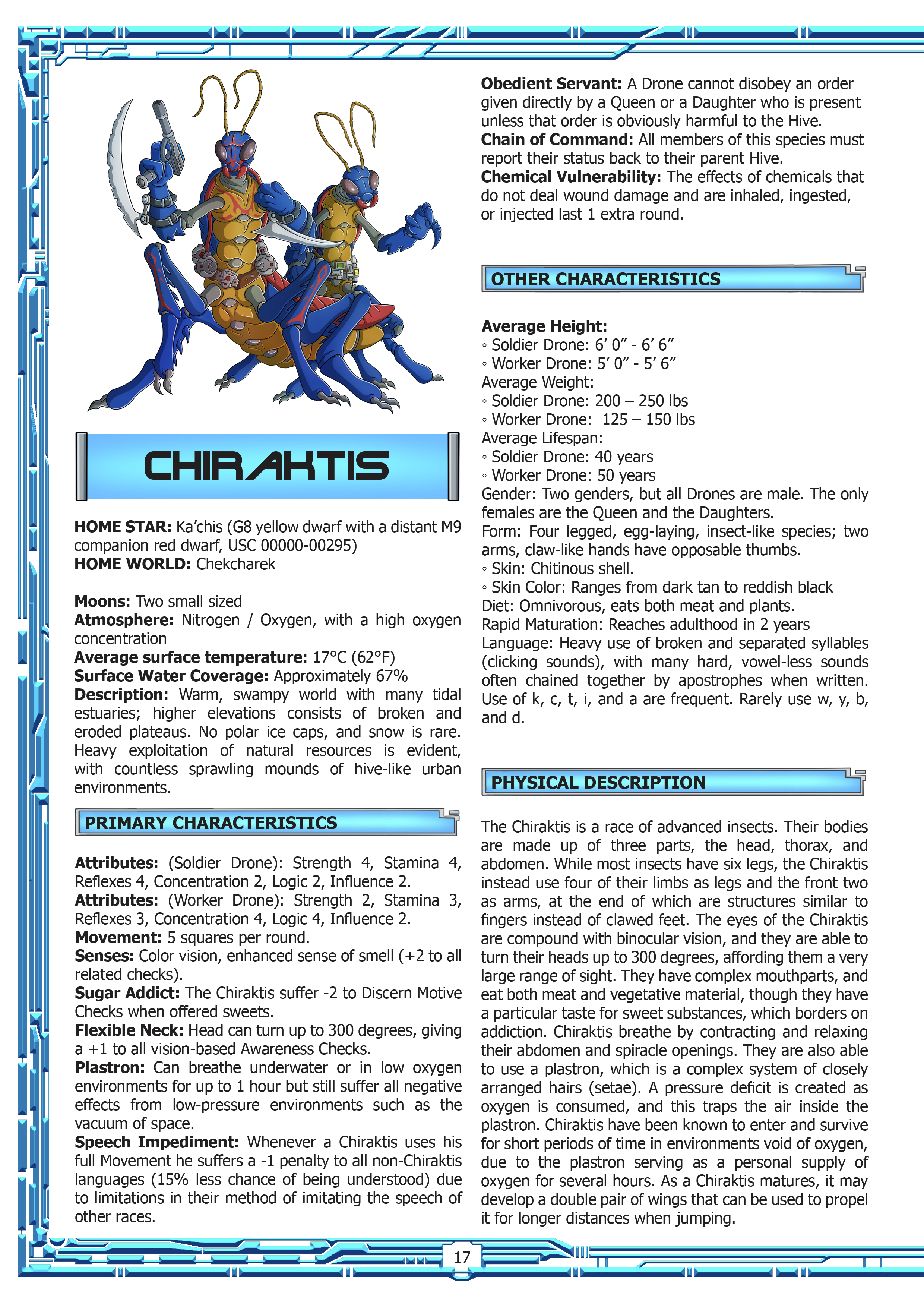
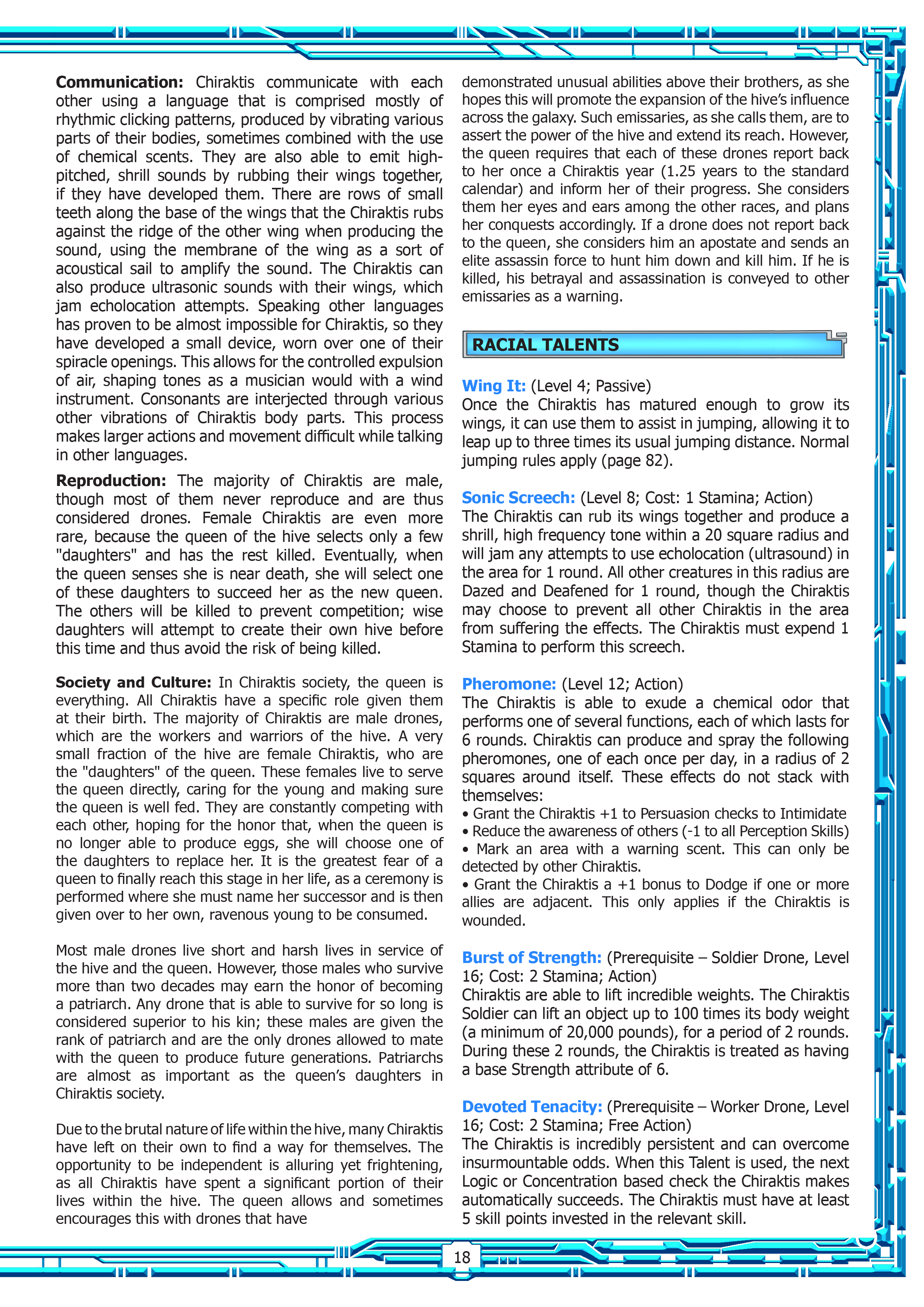
When designing the sentient alien species of Solar Echoes, I focused on grounding each race in its environment while translating biological traits into meaningful gameplay mechanics. Each species was built around a core principle: environmental adaptation should directly inform player abilities, strengths, and weaknesses.
For example, the Reln originate from a resonance-locked planet orbiting a K1 orange dwarf star. Due to the star’s light spectrum, their vision evolved with limited color perception but it extended into the near-infrared range. This biological trait translates into gameplay as enhanced vision in low-light environments, giving Reln characters a tactical advantage in darkness while limiting their ability to perceive certain visual cues.
Each playable race was designed with:
Defined gameplay attributes and stat distributions
Unique biological abilities and limitations
Combat-relevant strengths and weaknesses
Progression-based racial talents unlocked every 4 levels
These racial talents were designed to reinforce each species’ identity while offering players new tactical options over time.
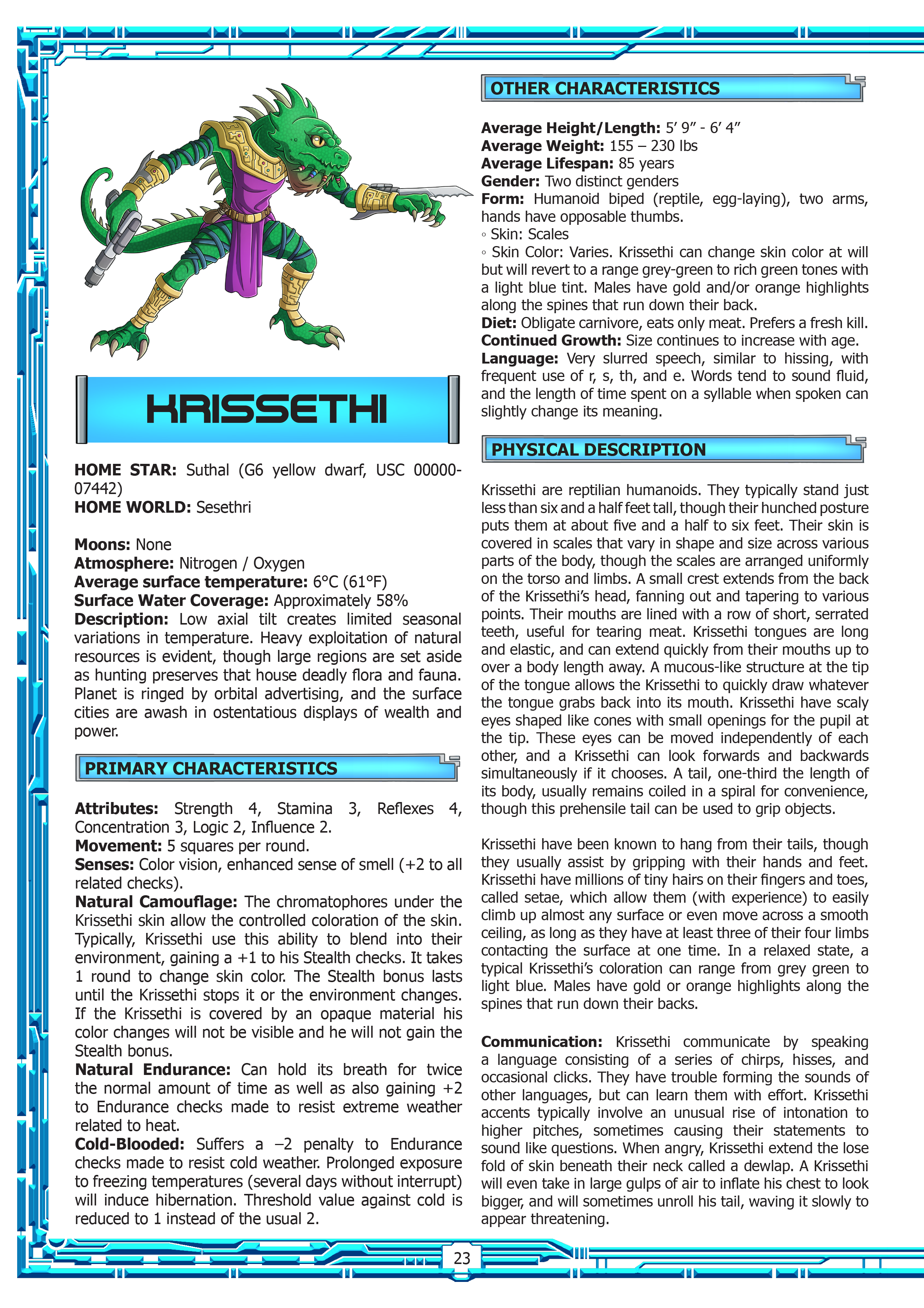
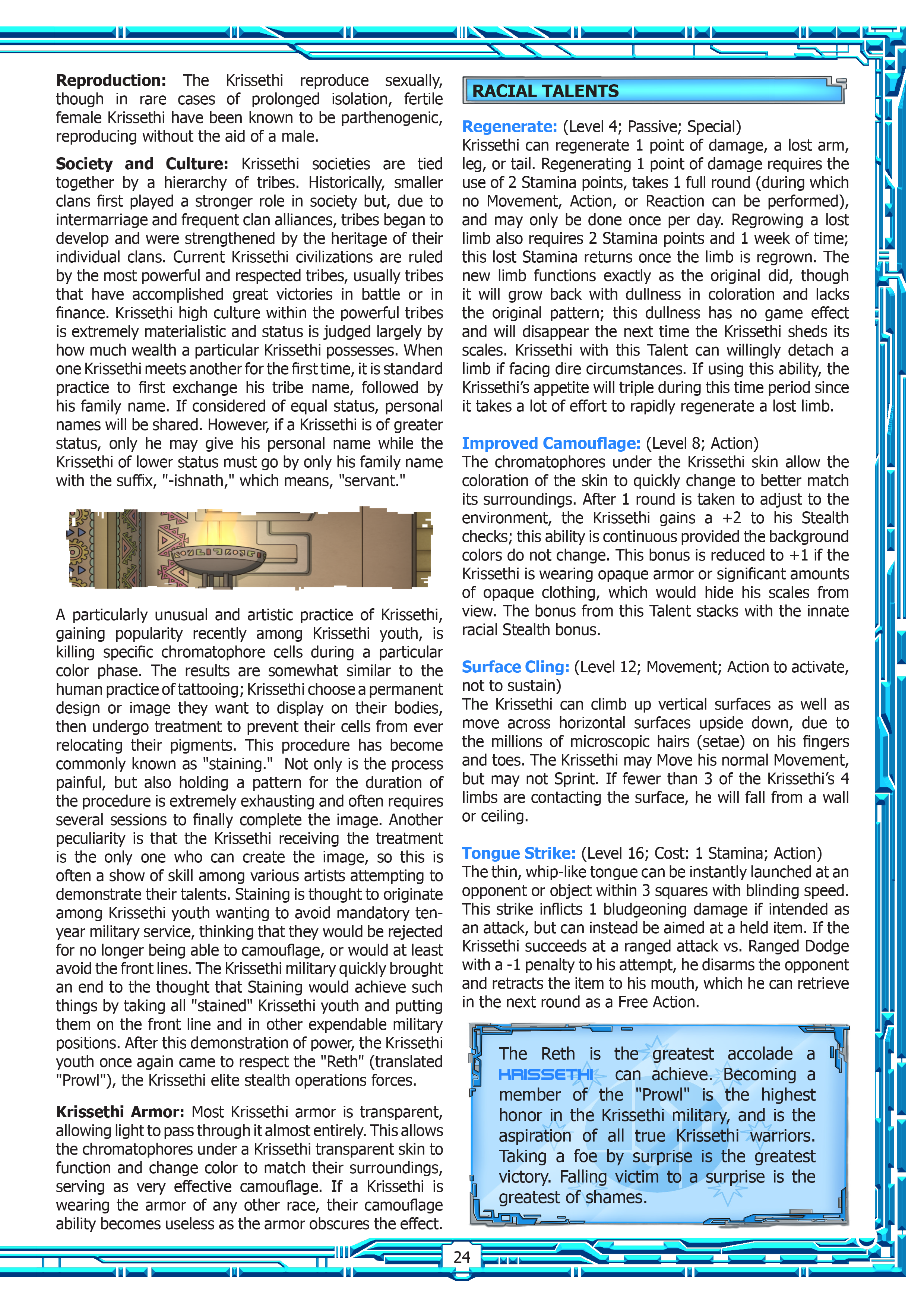
For instance, the reptilian Krissethi were designed as fast, agile, stealth-oriented opponents. Their abilities emphasize reconnaissance, ambush tactics, and survivability, allowing them to control engagements through positioning.
Regeneration of lost limbs and sustained health recovery
Active camouflage for stealth and ambush playstyles
Surface climbing to enable vertical positioning
A late-game retractable tongue attack capable of disarming opponents at range
This progression supports a playstyle that evolves from scouting and infiltration into high-mobility disruption, reinforcing the Krissethi’s identity as elusive, opportunistic hunters.
Creature and Lifeform Design
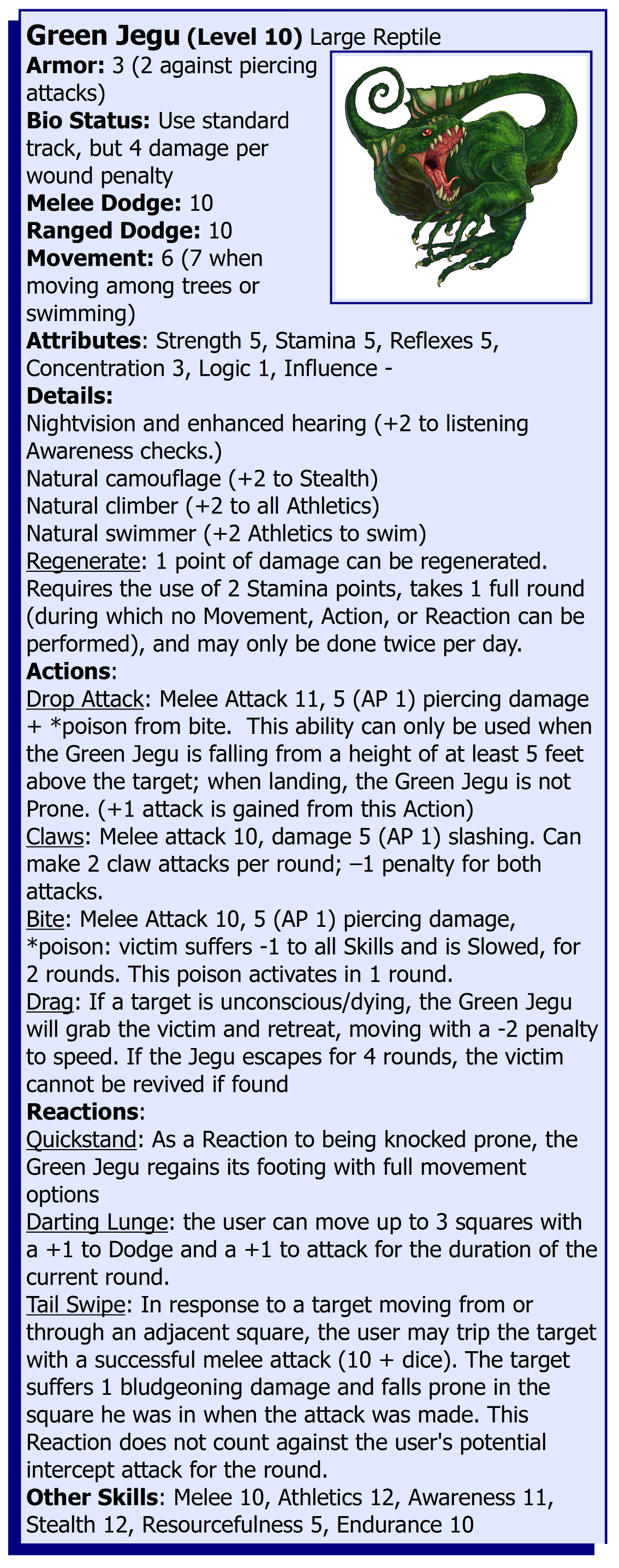
Creatures in the Solar Echoes universe are designed to reflect the diverse and often unpredictable ecosystems found across alien worlds. Unlike sentient species, these lifeforms are driven by instinct, environmental adaptation, and survival behaviors, creating encounters that feel realistic and grounded in their surroundings.
Drawing from a strong interest in biology and natural ecosystems, these designs are inspired by real-world animal behaviors and biological adaptations. Each creature is built with behavioral patterns, ecological logic, and gameplay impact, encouraging players to observe, adapt, and respond strategically in each encounter
Featured Lifeform: Kruosid – Silicate Lifeform
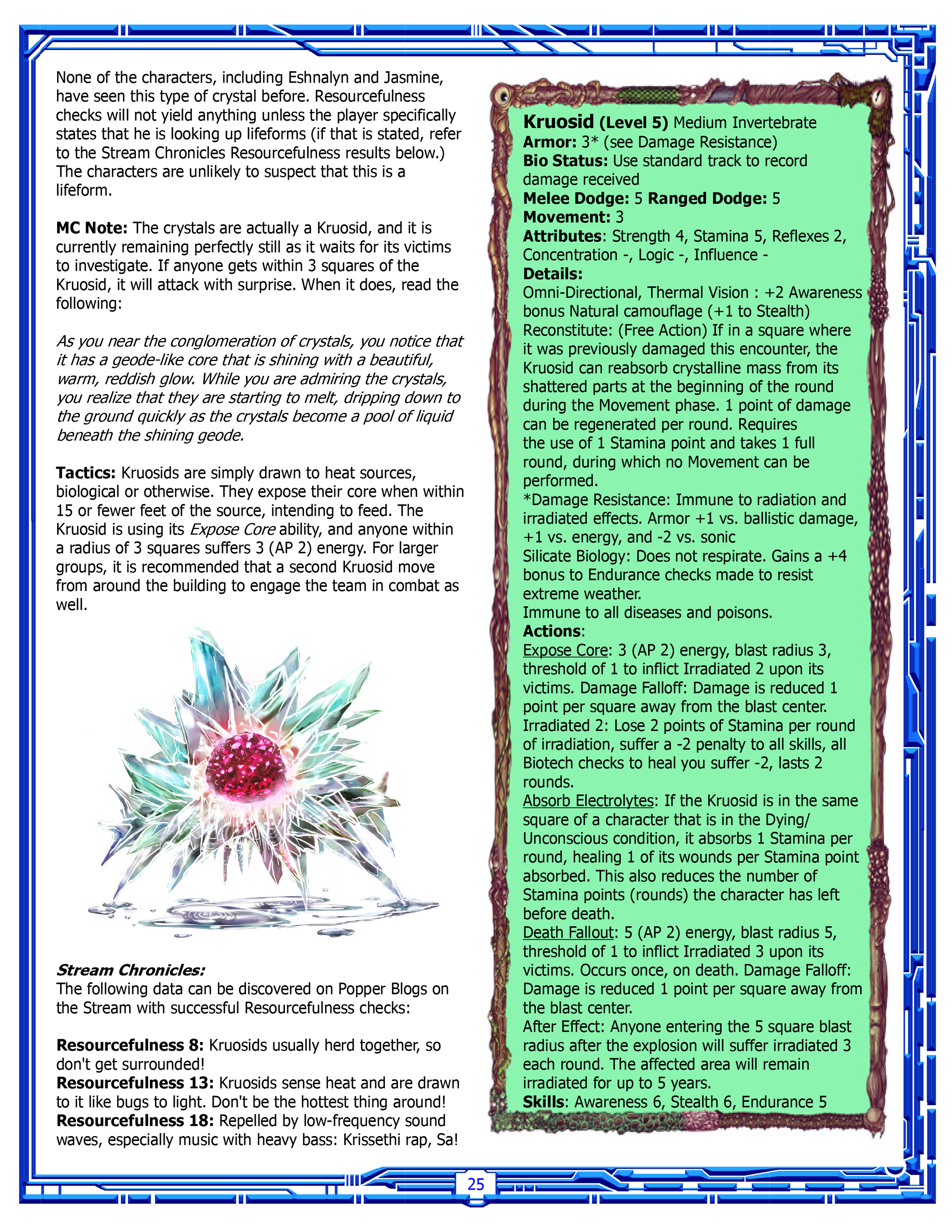
The Kruosid is a planetary lifeform designed to challenge player expectations of what constitutes life. Appearing as a conglomeration of transparent crystals surrounding a colorful geode core, it combines visual intrigue with an unexpected gameplay threat.
Behavior & Player Interaction:
Typically encountered in wilderness regions, away from settlements
Crystals respond dynamically to player proximity, melting and revealing the radiant core
Core emits irradiation that reduces nearby characters’ stamina, creating a layered environmental hazard
After weakening targets, the Kruosid absorbs electrolytes from affected characters, combining creature survival instincts with attacks that drain player resources
Design Goals:
Encourage careful observation and cautious exploration
Reward players who consider environmental effects in combat
Subvert expectations about lifeforms and challenge assumptions about threat identification
Reinforce gameplay immersion through creature design imagery
The Kruosid was designed to blend environmental storytelling with mechanical impact, transforming curiosity into a gameplay hazard. By tying its behavior and abilities to a clear ecological logic, the encounter rewards observation and strategic consideration while reinforcing the alien nature of the game’s worlds.


Robotic Enemy Design: Systemic Weakness and Identification
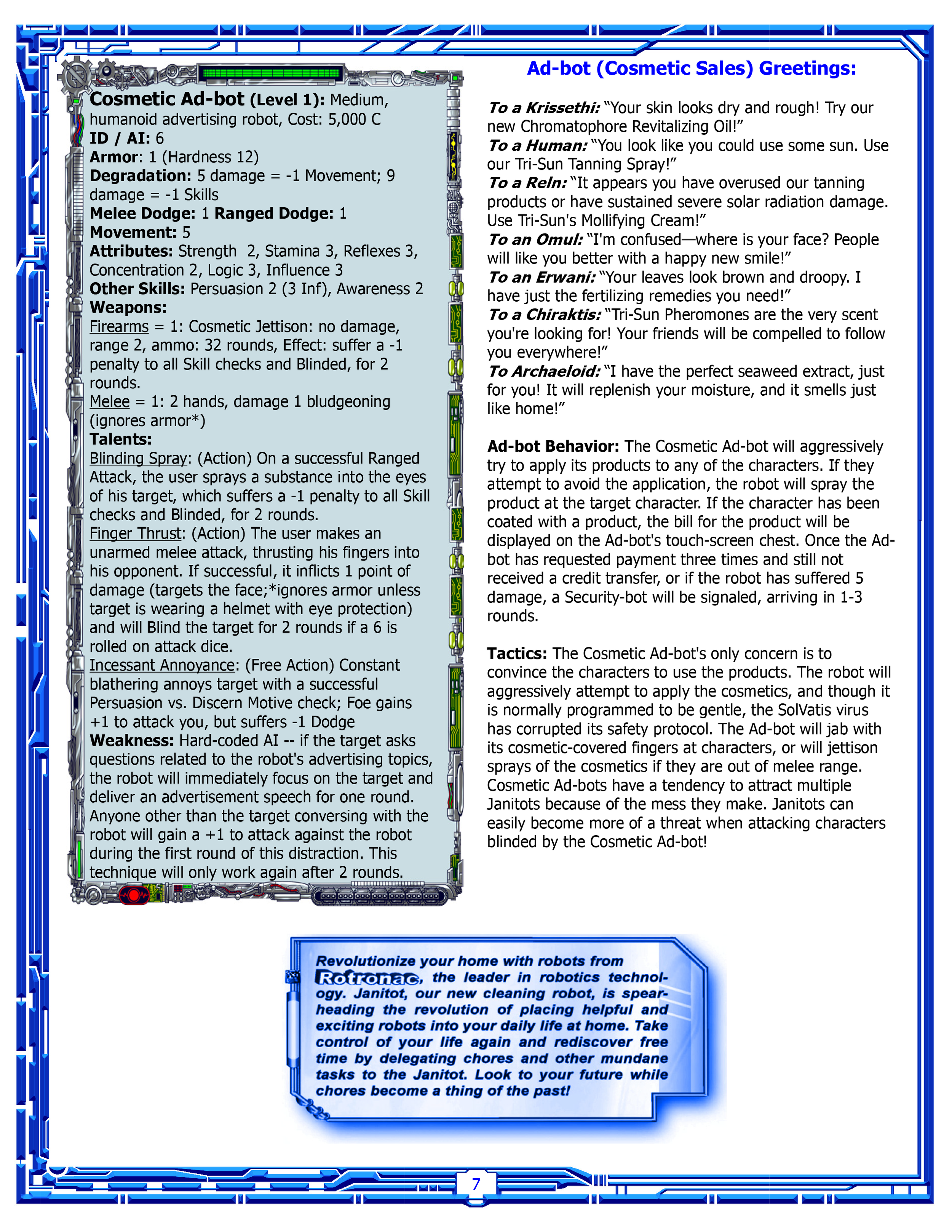
Robotic enemies in Solar Echoes were designed around predictable, function-driven behaviors that players can learn and exploit. Each robot includes a built-in behavioral weakness tied to its mechanical design or purpose.
Players who selected the Robot Identification talent during character creation can, on a successful check, identify specific robot models and reveal their associated weaknesses, enabling coordinated team strategies and a situational advantage in combat.
This system was designed to:
Reward system knowledge and preparation
Encourage team communication
Introduce non-damage-based combat interactions
Reinforce function and design vulnerabilities
Each robotic weakness was designed to emerge from it’s design or intended function, ensuring that vulnerabilities feel intuitive, learnable, and consistent across encounters.
This reflects a broader design goal of rewarding player specialization, where character build choices unlock unique tactical interactions with enemies.
Cleaner Bot: Corrupted Sanitation Unit
Core Concept: Maintenance behavior turned into vulnerability
Behavior:
Patrols and cleans designated areas
Engages targets at close range
Prioritizes environmental “messes” over combat when detected
Weakness (Discoverable through the Robot Identification talent):
If debris is created nearby (i.e, trash thrown on the ground), the robot will interrupt combat for 1 round to clean
Gameplay Impact:
Creates a controllable disengage window
Rewards players with an insight afforded through their character design choices
Introduces environmental manipulation into combat
Robotic enemies in Solar Echoes are designed to translate function and mechanical design into intuitive, exploitable gameplay systems. By tying each unit’s behavior and weakness to its intended purpose, these encounters reward player knowledge, preparation, and coordination, while reinforcing a consistent and intuitive logic across all robotic threats.
NPC and Combatant Design
NPCs in Solar Echoes are designed to serve a variety of gameplay roles, from hostile opponents to hired allies, and even as opponents in vehicle warfare. Each NPC is built using the same principles applied to playable races: unique equipment, skill distributions, talents, and tactical behaviors are tailored to their role, ensuring encounters feel dynamic, meaningful, and grounded in the game world. Player choices, such as character build and talents, influence how these NPCs can be engaged and countered, reinforcing strategic depth across all encounters.
Karanos: Reln Adaptive Combatant
Karanos is a highly trained Reln fighter designed to demonstrate adaptive combat behavior and tactical flexibility. Built from the Reln species, his combat style reflects both environmental specialization and disciplined training, allowing him to respond dynamically to changing battlefield conditions. This enemy incorporates custom equipment, combat talents, and tactical AI to provide challenging combat encounters.
Tactical Role and Behavior:
Functions as a mid-range skirmisher with adaptive decision-making
Evaluates enemy positioning to determine optimal attack patterns
Transitions fluidly between ranged pressure and melee engagement
Prioritizes control and disruption when enemies attempt to reposition
Combat Logic and Ability Use:
Uses Sprayfire with his Phoenix Assault Gun when multiple enemies are grouped, applying pressure to clustered targets
Defaults to focused ranged attacks against individual enemies when targets are spread out
Targets fleeing or advancing enemies with a Stun Gun, disrupting movement and creating openings
Engages in melee using an Energy Blade, often combined with Lunging Thrust to quickly close distance
Utilizes a shock stick to Daze opponents in close combat, gaining a tactical advantage
Reacts defensively with Sidestep when targeted, or uses Quick Fade to reposition into nearby shadows
Uses Reln echolocation to detect enemies and navigate effectively when vision is impaired (i.e., smoke, darkness), reducing the effectiveness of vision-based counterplay
Design Goals:
Showcase adaptive AI that responds to player positioning and behavior
Reinforce Reln identity through tactical awareness and environmental interaction
Encourage players to avoid predictable formations and positioning
Create a combatant that pressures both ranged and melee players through flexible engagement tools
Design Insight:
Karanos was designed to function as a responsive, multi-role opponent whose effectiveness scales with player behavior. His ability to shift between area pressure, disruption, and close-range combat creates a dynamic encounter that rewards players who can anticipate and counter his decision-making patterns.