CREATIVE DIRECTION & PRODUCTION
Solar Echoes TTRPG: Art Direction Concepts to Final
This example highlights the multi-stage art development process for three alien species in my Solar Echoes tabletop RPG. The first column features my original concept art sketches, created to establish the initial visual direction. The second column shows the black-and-white illustrations produced by the first artist I worked with, an approach chosen due to book-printing budget constraints that required minimizing color in the early rulebooks. The third column presents the later color versions developed in collaboration with a second artist, who built upon the original designs while making targeted adjustments; these color illustrations were used in my animated “video comic” project and later incorporated into several Solar Echoes digital publications. In the final column, a third artist revisits the established designs and reinterprets them with a fresh anime-inspired, cel-shaded aesthetic, remaining faithful to the core concepts while modernizing the overall look. These updated full-color versions were included in the digital-only 2nd edition publication of the Solar Echoes Player’s Guide, which underwent a comprehensive artistic overhaul featuring extensive new full-color artwork.
I served as the art director throughout this entire process, guiding each artist through multiple iterations to ensure the designs aligned with the intended tone and lore of the species. My role involved evaluating posture, proportion, coloration, and other key features, then providing detailed feedback to refine each version. For example, the early Chiraktis concept felt too slender to convey the power of a brutal insectoid warrior, so I directed the second artist to incorporate the bulkier, more muscular characteristics of a grasshopper. This adjustment ultimately defined the visual identity and set standards for future designs of Chiraktis warrior drones. This hands-on direction was central to shaping the final look of each alien and ensured consistency across all stages of development.
Solar Echoes TTRPG: Art Direction
This series of images demonstrates the collaborative art development process behind one of the alien species in the Solar Echoes universe: the Chiraktis.
In my original design details, I asked the artist to depict one in a martial-arts fighting stance. His first concept sketch (1) established the foundation, but I requested a more grounded pose with its guard up, ready to strike with a kick (2). After reviewing the revision, I provided photo references of martial artist Tony Jaa in Muay Thai poses, leading to the next iteration (3). This version captured the spirit I wanted, and I then combined image 3 with the back-leg stance from image 2 for further refinement (4).
The artist incorporated those notes and delivered image 5. To fine-tune the details, I drew angled color lines to guide positioning, added wings to the abdomen, and suggested separating the raised hand from the head. His next version (6) was nearly final. I then asked for a few final tweaks--removing foot segmentation, slightly adjusting the raised leg and right arm, and rotating the head to face more to the left. I also directed the coloration, drawing inspiration from the vivid red, blue, and yellow African Milkweed Grasshopper. The result is the final Chiraktis design (7), followed by an alternate version (8) showing the red “rage paint” worn by aggressive soldier drones ready for battle.
The bladed weapons were created by the artist based on my feedback to emulate the spiked forelegs of a praying mantis. I also requested a belt with a holstered pistol and grenades to give the Chiraktis ranged combat capability, reinforcing their role as both melee and ranged fighters.
The Star Legation: Art Direction
Narrative Context and Emotional Goals
The background art in The Star Legation set both the scene’s location and overall mood. As the only human aboard a starship crewed by multiple alien species, the protagonist periodically retreats to his quarters to privately report mission progress to one of two female human liaisons overseeing his mission. Given his isolation and limited human contact, it was natural that he might develop subtle romantic feelings of emotional attachment, which the visual novel supports by allowing players to choose professional or romantic paths with either woman. It was important that the quarters on the starship felt large and cold to emphasize the protagonist’s feelings of isolation. I created a rough image to illustrate my proposed room composition and layout, with a focus on guiding the viewer's eye toward interactive elements while establishing mood and spatial depth.
Concept Development and Early Visualization
The background artist did a fantastic job interpreting my vision and included all the key elements from my concept image, after which I provided notes suggesting a few small adjustments to the initial linework. I also supplied two images for the touch-screen desk (including the recurring starmap) to maintain the thematic focus on the journey and show that, even in his private quarters, the protagonist continued tracking their path through alien territories.
Color, Lighting, and Mood Direction
I also advised the artist on coloration and lighting for the final image, suggesting tones that emulated the incandescent, cold lighting of a hospital. This coloration would further convey the sense of isolation and discomfort the protagonist felt.
Final Background and Scene Implementation
This finalized background incorporates planned animations for the door on the left and a star-scape visible through the blank window areas to convey the starship’s movement. The reflective floor and cold, hospital-like color scheme further open the space and reinforce the protagonist’s isolation.
Collaborative Art Direction Approach
This background art represents the collaborative style I prefer when working with artists: establishing a clear vision through prototypes, communicating specific requirements, and offering iterative feedback throughout the design process.
Unity ARPG: Art Design Notes for Artist of Space Station Types
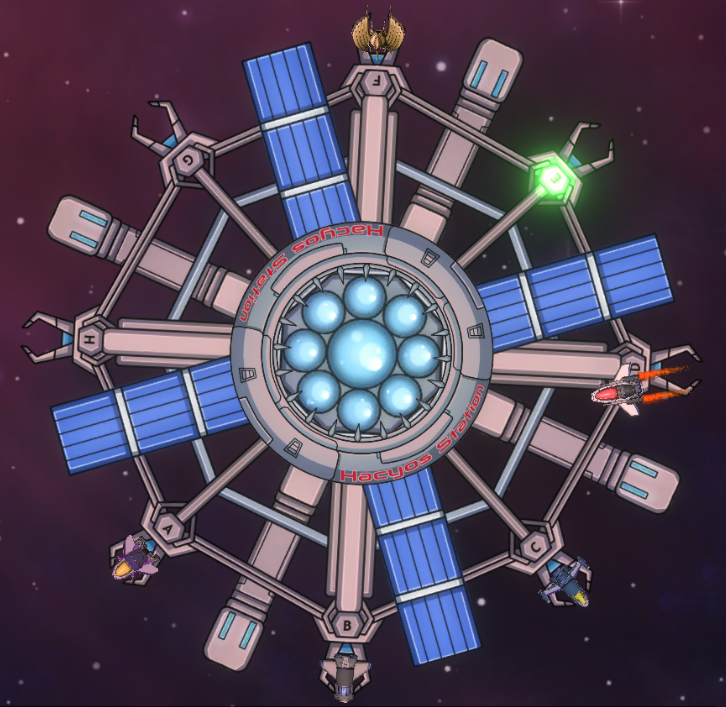
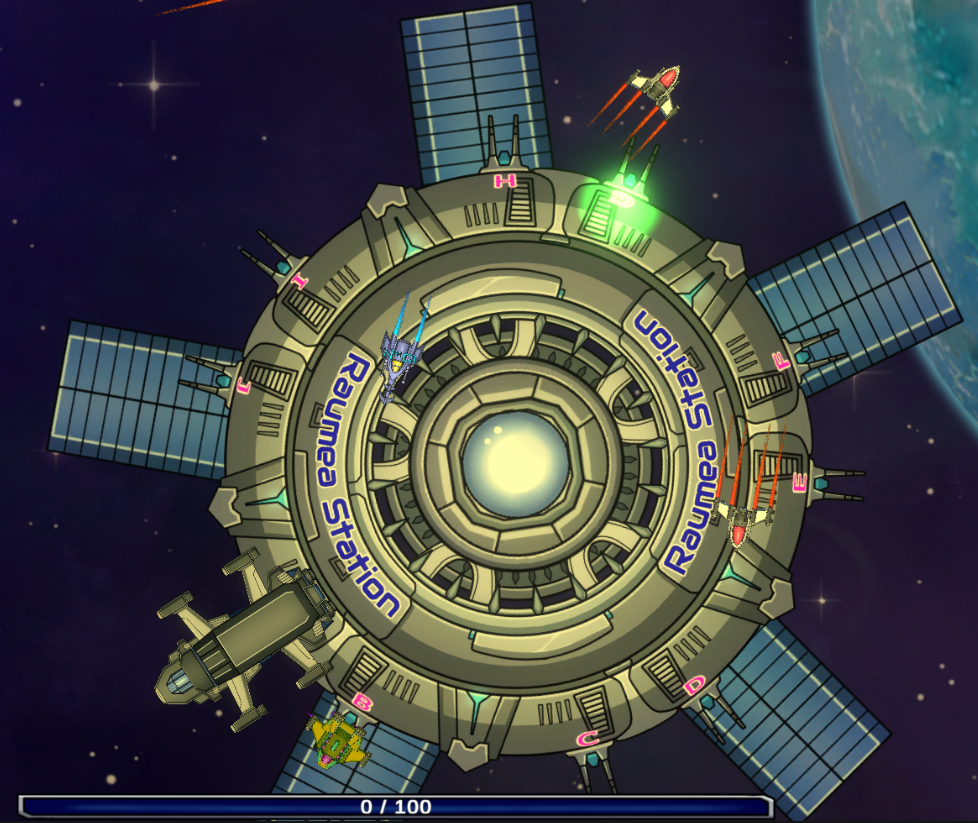
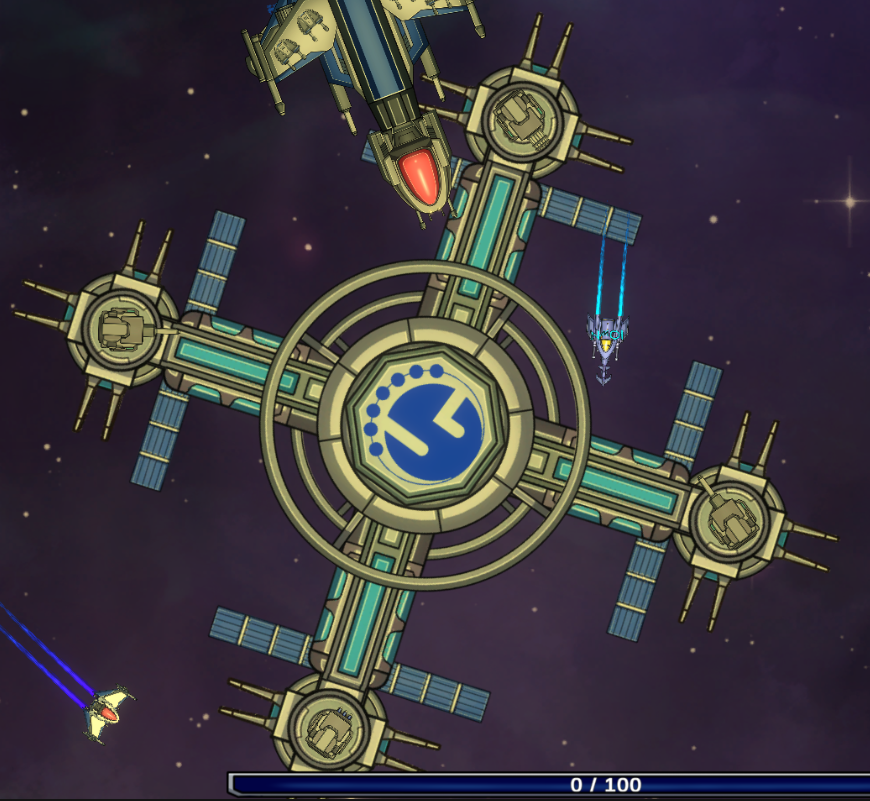
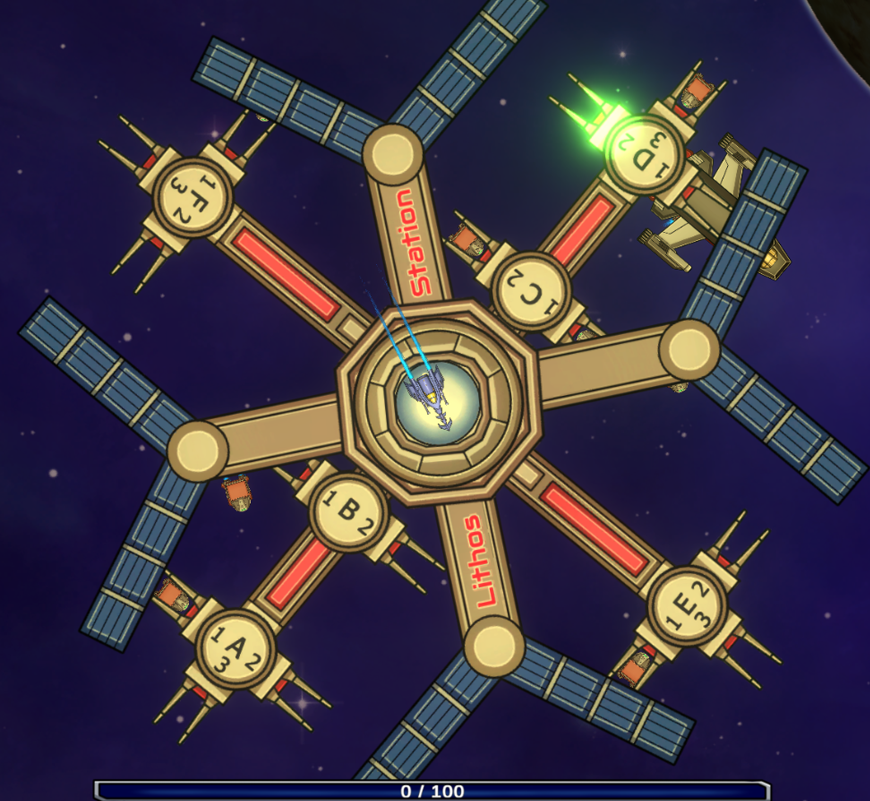
To guide the creation of a 2D art template for a modular space stations, I assembled a collage of concept art references from various artists, annotating each image in Photoshop with notes and arrows to highlight specific design elements I wanted to incorporate.
This visual guide helped communicate my vision clearly to my artist, who built the modular asset set based on these directions. I then used her system to design and refine multiple space stations, adding my own variations and enhancements in Photoshop to achieve the final look.
Star Fated (Unity) Minimalist UI Design
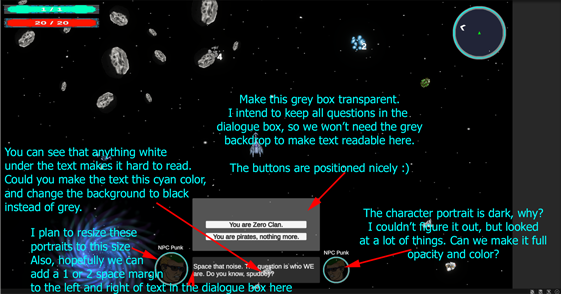
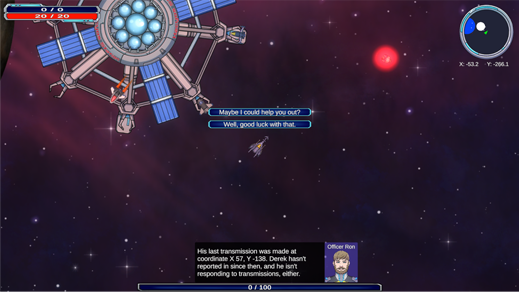
As I began designing the game’s UI layout, my primary goal was to maintain a minimalist approach that allowed players to take in as much of the game universe as possible. I positioned the dialogue interface at the bottom of the screen, featuring a simple darkened text field and a character portrait on the left or right to indicate the speaker. Working closely with my programmer, we fine-tuned the spacing and sizing to ensure readability while maintaining a clean visual footprint.
For player choices, I used a visual novel-style layout with text-encapsulated buttons centered in the middle of the screen to highlight their significance and add a sense of urgency.
We stripped away any non-essential elements to reduce visual clutter. Once the core functionality was in place, I collaborated with the artist to define an art style that aligned with the game's tone while avoiding anything too flashy or distracting.
Throughout the entire process, my focus remained on keeping players immersed in the space around their ship, with a UI that supported the action on screen without overshadowing it.
Star Fated (Unity) Visual Design: Company Logos & Taglines
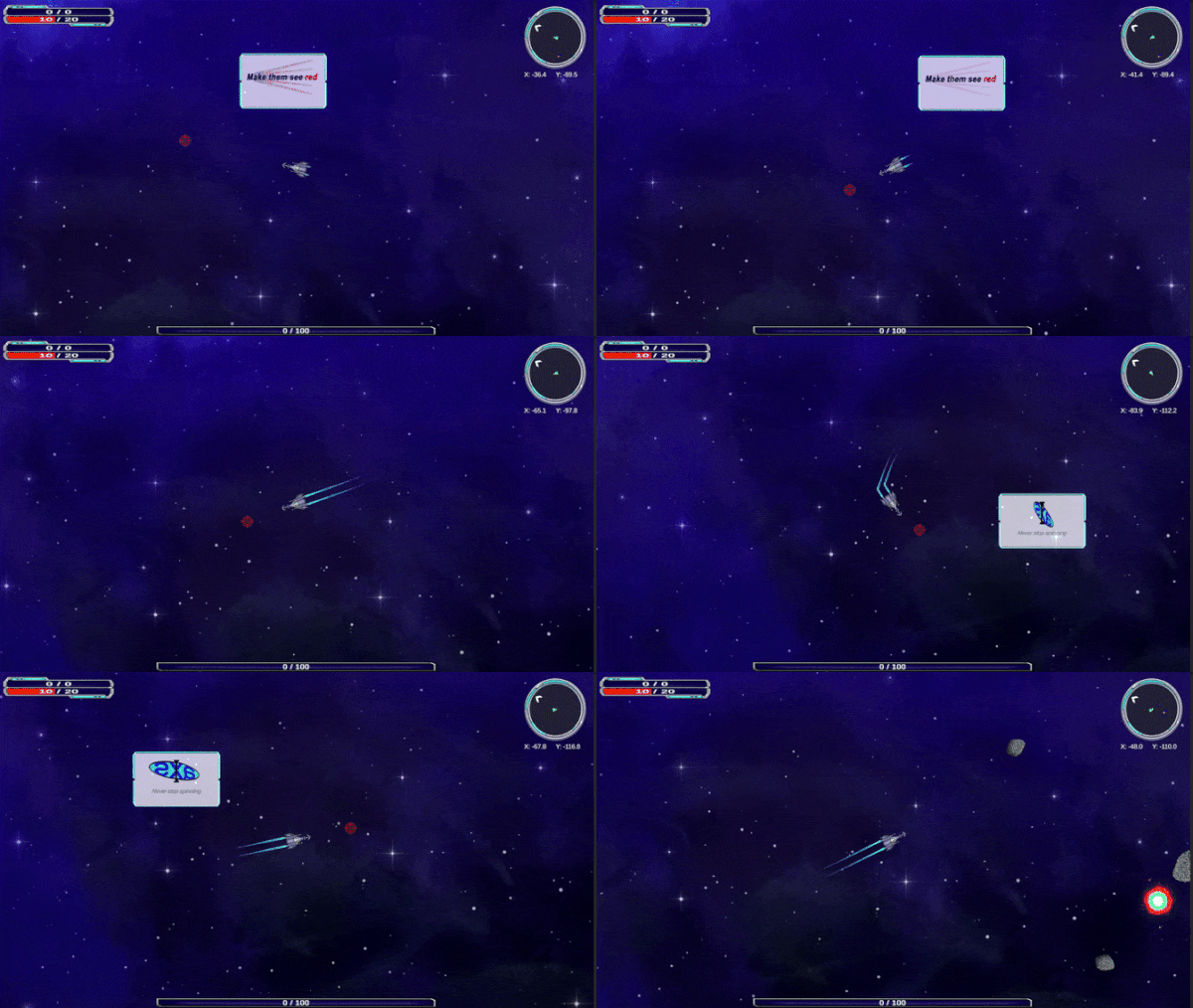
To enhance the game's sci-fi setting and reinforce gear diversity, I designed and created a network of fictional corporations that manufacture and compete in the weapons, shields, engines, and armor markets.
Each company specializes in specific types of gear, featuring visual branding, lore, and in-game presence.
Design Goals:
Increase gear identity and variety across similar equipment types
Add strategic player choice through brand traits
Use environmental storytelling to ground mechanics in lore
Define tone through in-game ads on space stations, billboards, starships, etc.
Player Impact:
Players will recognize and favor certain brands for their playstyle
Ads and taglines provide flavor and humor while reinforcing company identities

Star Fated (Unity): Creating a Conditional Dialogue System
After establishing the core dialogue system in Unity for the Solar Echoes ARPG, I collaborated with my lead programmer to expand its functionality with conditional conversation triggers.
We designed a system that allows variables to be assigned and tracked during conversations, enabling specific dialogue to trigger based on the presence or absence of particular variables, as well as player choices, inventory items, or currency.
Additional features include the ability to designate repeated or queued conversations, creating natural and responsive interactions. These enhancements allowed the game’s story to adapt to player decisions and actions, reinforcing immersion and agency.
Star Fated (Unity): Creating Dynamic Dialogue Triggers
To make conversations in the Solar Echoes ARPG feel truly dynamic, I collaborated with my lead programmer to design a set of advanced trigger systems for NPC interactions. Depending on player actions, conversations could be initiated by entering a trigger area, right-clicking an NPC to talk, attacking an NPC, or being attacked by an NPC. We also implemented conditional responses, such as a “flee” conversation when an NPC’s health dropped below a certain threshold, and a brief “last words” dialogue when an NPC was destroyed. These triggers could be sequenced or randomized, allowing multiple comments per NPC. This system created a variety of realistic, reactive responses and made NPCs feel alive with distinct personalities, enhancing player immersion in the game world.
Star Fated (Unity): Creating an Immersive Dialogue System
In the Solar Echoes ARPG, I collaborated with my lead programmer to design and implement a versatile dialogue system from the ground up. My goal was to create a tool that enhanced player immersion through both visual and audio expression. The system displays character portraits on either side of the dialogue box to clearly identify speakers, with dynamic facial expressions that shift to reflect tone and emotion.
Each line of text is paired with a voice-acted audio clip, timed to flow naturally between dialogue segments and simulate a realistic conversational rhythm. Additional features include autoplay options, skip permissions, priority handling for overlapping conversations, and the option to proceed to another conversation or a set of questions.
Star Fated (Unity): Dynamic Story-Event Trigger System for Open-World Gameplay
Role:
Creative Director / Systems Designer
Problem:
In an open-world environment, players can approach story content in unpredictable ways. Traditional trigger zones along a railroad-like path often fail to guarantee narrative pacing or conversation order in an open world game. Some story-critical dialogue in this game was being missed when players navigated outside the expected paths.
Insight:
Players shouldn’t have to be forced down specific routes to experience story progression. The story should find the player when needed, invisibly and naturally.
Solution:
I designed a dynamic trigger system in Unity that activates mobile, invisible “conversation seekers” to locate the player’s ship, based on the enemy homing missile script.
I integrated this with the conversation system using Scriptable Objects to manage activation/deactivation logic.
The system was optimized by automatically deactivating the seeker object after conversation completion to prevent game performance degradation.
Result:
Story conversations now trigger reliably regardless of player path.
Maintains immersion with no visible interruptions or forced movement.
Improved intended pacing and narrative consistency across multiple playtests.